intermediatePower & Batteries9-Sept-2016
How to make a wireless charger for Samsung Galaxy S 4 mini (GT-I9195) smartphone

Anton Shagaev
Tashkent, UZ
1 hour
--
14
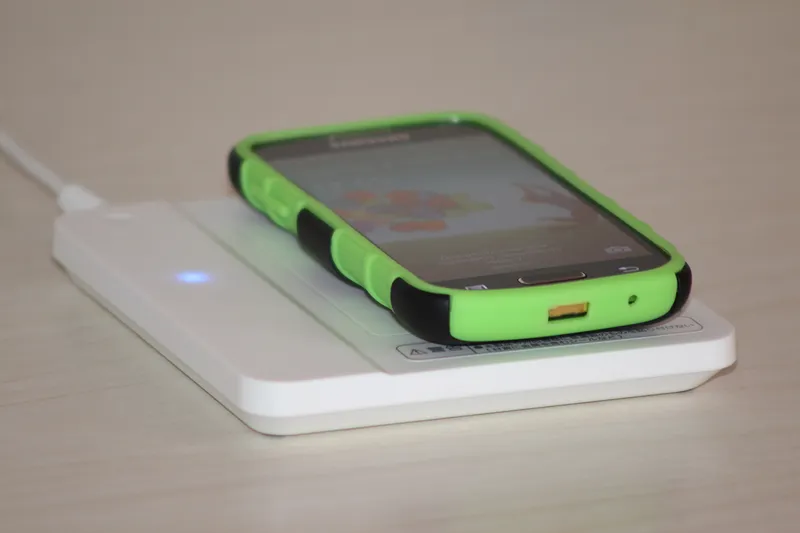
Recently, I made a gift for my 6-year-old son for successfully passing his karate exam and gave him a small-sized smartphone from Samsung. Initially, the plan was to buy him a Japanese smartphone with a wireless charging station. I didn't want him to have to plug into an outlet to charge his phone, but simply to place his phone on the charging station, which is constantly plugged into the network. That's what I did—I bought him a JapaneseSH-07Dfrom NTT Docomo and a wireless charging stationSH02from the same company, but later I found out that this smartphone had a relatively high specific absorption rate (SAR) of electromagnetic energy. The SAR indicator of the Japanese smartphone at 1.12 Watts/kilogram was within the norm, but I still thought it might not be entirely good for my little son's health. In the end, the choice settled on the Samsung Galaxy S 4 mini, whose SAR level was only 0.33 Watts/kilogram. But I missed the most important thing—the Galaxy 4 mini did not have a built-in QI module for wireless charging, and my entire plan for wireless phone charging didn't work. After doing a simple Google search, I understood how to solve this problem. And here's how I did it.
Wireless charging station. I bought the Japanese SH02 from NTT Docomo because I needed high quality and safety of the device. You can buy it here.
Steps
1
Remove the back cover
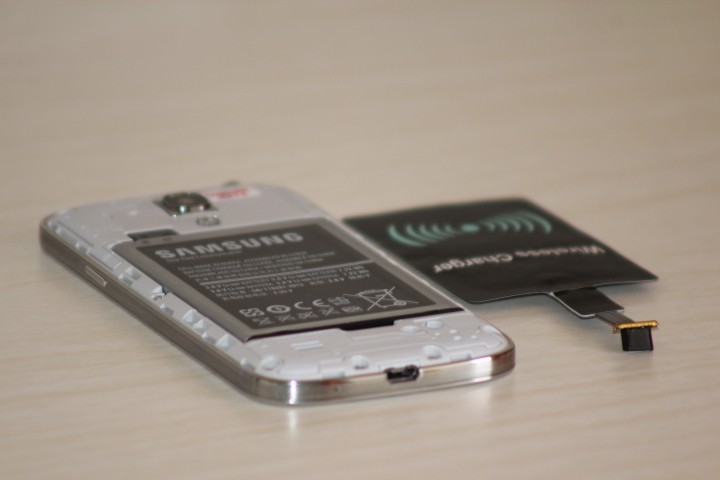
To install the QI module, we need to remove the back cover from our smartphone. It comes off quite easily — you need to carefully hook it at the special recess located on the side in the upper left part of the cover.
2
Installing the QI module
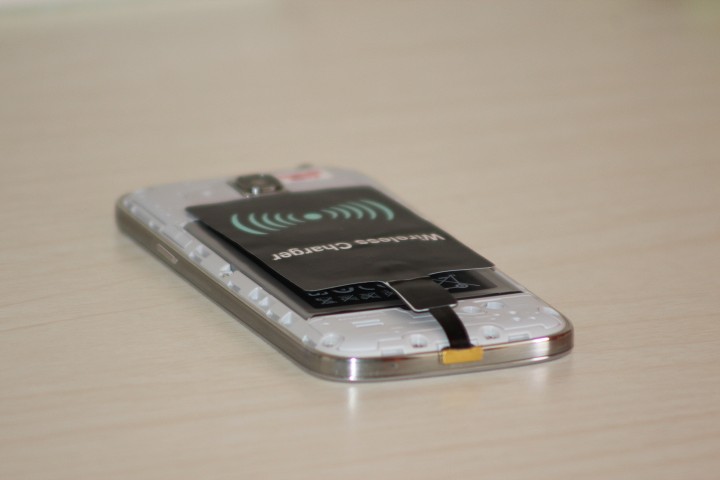
Insert the QI module connector into the micro USB port of your smartphone, as shown in the picture.
3
Installing the back cover back
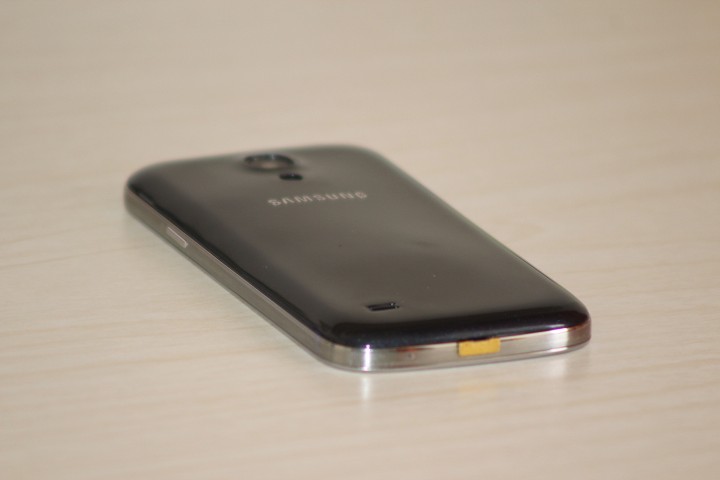
Carefully clamp our installed QI-module with the back cover and your Galaxy mini is ready for wireless charging!
Discussion (0)
No comments yet. Be the first!
Maker
Anton Shagaev
Tashkent, UZ
Anton is the Founding Engineer at Tinkster. He translates industrial reliability into software architecture, ensuring the platform's core is built to last. Anton studied oil and gas engineering in the United States and also holds two honors degrees from Tomsk Polytechnic University.
Related Projects



AI Project Assistant
Tinkster Neural Core
Hi! I am the AI assistant for this project. Ask me any questions about the assembly, code, or components.