Compact mmWave Presence Sensor Case — ESP32-C3 + LD2450 + LD2410C
Description
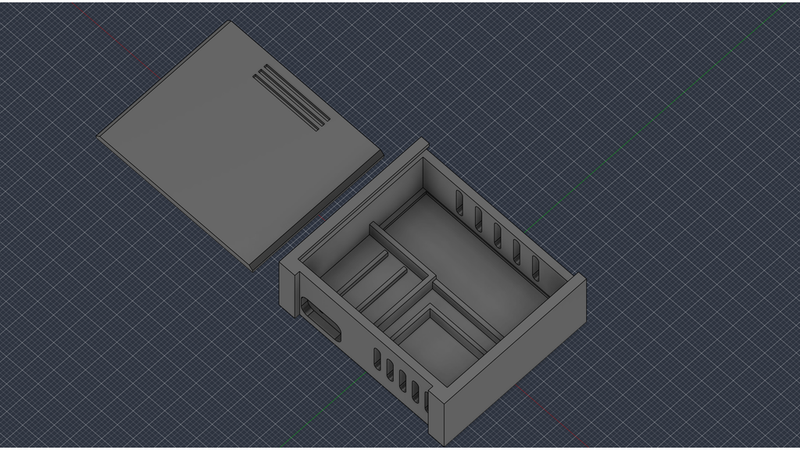
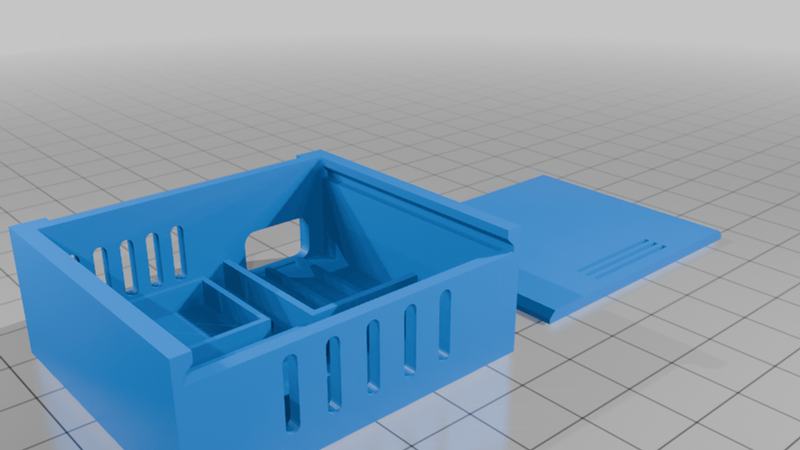
A small, support-free enclosure for a dual-radar presence sensor: an HLK-LD2450 tracking radar and an HLK-LD2410C presence radar, both aimed through the front, driven by an ESP32-C3 Super Mini Plus. Two printed parts, no screws, no inserts, no glue needed except an optional dab to hold the boards.
The case is only 19.5 mm deep, so it sits close to a wall or shelf edge and does not look like a box of electronics. The radars fire through a 1 mm front skin, which is thin enough to be near transparent at 24 GHz, and both are located by pockets and raised rims so they cannot shift sideways.
Summary
Outer size: 52 × 45.3 × 19.5 mm (W × H × D, height includes the 1.5 mm feet)
Two parts: case + slide-off back lid
Lid slides down into grooves in the side walls, 0.15 mm clearance per side, with grip ridges on the outside
USB-C passes straight down through the floor
5 ventilation slots in the top, 5 in the floor
Prints face-down with no supports and no long bridges
Features
Radar windows. The LD2450 sits in the upper pocket and the LD2410C in the lower left pocket. In front of each, the wall is thinned to 1 mm. Hi-Link's own documentation recommends a radome of 1/8 wavelength or thinner, and 1 mm PLA is inside that. The pockets are 1 mm deep, which also leaves room for the components on the antenna side of the LD2410C, and rims around the edges hold each board in place.
ESP32 holder. The ESP32-C3 Super Mini Plus stands upright in the lower right corner with its USB-C port facing down. Two ribs hold the board 1.5 mm off the wall so solder joints on the back of the board clear it. The board's bottom corners rest on the floor on either side of the USB opening, and a rim above the board takes the force when you push the cable in.
Back lid. No screws. The lid drops into grooves in the side walls and rests on the floor. The groove roofs are chamfered at 45° and the lid's rear edges are bevelled to match, so both parts print without overhangs and the lid still cannot fall out backwards.
Internal dimensions
Inner cavity 47 × 39.8 × 14 mm
Side walls 2.5 mm
Front, top, floor 2.0 mm
Radar window 1.0 mm
LD2450 pocket 44.6 × 15.6 mm
LD2410C pocket 22.6 × 16.6 mm
ESP32 slot 18.6 mm wide, 22.8 mm tall
USB-C opening 12.5 × 7.5 mm, in the floor
Lid 49.3 × 41.8 × 2 mm
Printing
Orientation: case front face down, lid flat with the grip ridges up. Both parts fit on the plate side by side in about 90 × 50 mm.
Supports: none.
Material: PLA or PETG. Do not use anything filled with carbon fibre or metal, since it blocks 24 GHz.
Layer height: 0.2 mm. Use 0.15 mm or finer if you want the radar windows as even as possible.
Walls: 3 perimeters, 20 % infill.
Note: the only bridge is the top edge of the USB opening, 8.5 mm wide, which prints cleanly.